Showing posts with label Smartphone. Show all posts

Sunday, July 10, 2016

Acer officially unveils the stylish Liquid E1 mid-ranger

Today Acer announced a new member of its lineup of mid-range
Android smartphones. The smartphone is called Liquid E1 and is basically a trimmed down version of the CloudMobile S500.

Powered by a 1GHz dual-core processor with 1GB of RAM and 4GB of internal storage, the Acer Liquid E1 runs with Android 4.1.1 Jelly Bean out of box. It's sporting a 4.5-inch display of qHD resolution (960 x 540 pixels) and boasts an 5MP auto-focus primary camera with LED flash at the back and a 0.3MP video-chat camera at the front.
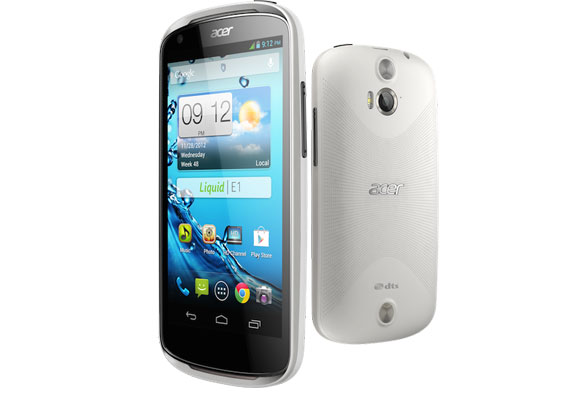

The Liquid E1 dimensions are spot on for a midranger at 132 x 68.5 x 9.9 mm with a weight of 130 grams. Popping the stylishly designed back cover open reveals a somewhat underwhelming battery with a capacity of 1760mAh. Acer says that it should be good for up to 8 hours of talk time and around 400 hours of waiting patiently in standby.
The Liquid E1 also features an FM receiver, microSD card slot and the usual array of sensors. Judging from those official shots, we really like the Liquid E1 design, particularly on the dark grey version with red accents.

Annoyingly, pricing and availability are still only known to Acer.


Friday, January 25, 2013

Safaricom announces the Yolo, Africa's first Intel-powered smartphone


Intel is finally opening its wings and spreading its mobile influence to Africa, as Kenya's Safaricom has officially introduced the Yolo phone. The device, which will be the very first Intel-powered smartphone on the continent, will be priced at Kshs 10,999 ($126) and bundled with 500MB of data. The handset supports HSPA+ network connectivity and packs a Z2420 Atom processor that reaches speeds of up to 1.2GHz. If that CPU sounds familiar, it should, because it's the same "Lexington" chip that we sampled a few weeks back at CES. As for the rest of the Yolo's specs, you'll be looking at Android 4.0 on a 3.5-inch display and snapping pictures with a 5-megapixel shooter capable of recording 1080p HD video. Not looking to compete with top-shelf handsets, Safaricom hopes to catch the eye of frugal first-time buyers with this budget-friendly device. If you fit the bill, you may want to check out the Yolo as soon as possible -- after all, your phone only lives once.

Thursday, January 24, 2013

Nokia Lumia 955 is Based on Nvidia Tegra 4, Has 2 GB of RAM, 5.5 inch Display

Deviantart user nik255 recently submitted to
us the Nokia Lumia 955 concept, that’s
supposed to be a “Windows PRT” device, supposedly the next Windows for ARM version being on boar. The idea is that instead of Windows Phone and Windows RT you get Windows PRT, a combo of them.
The OS brings higher resolutions, digital ink feature, more tile sizes and an integrated desktop environment. The latter will allow the user to rely on the phone/tablet as a computer and run apps in the classic windows mode, with display, keyboard and mouse, plus customization options.
Nokia Lumia 955 is Based on Nvidia Tegra 4, Has 2 GB of RAM, 5.5 inch Display
The Nokia Lumia 955 concept packs an Nvidia Tegra 4 processor, 2 GB of RAM, a 5.5 inch PureMotion HD++ display, with 1920 x 1080 pixel resolution and a 3.600 mAh rechargeable battery. There’s also microSDXC on board, USB 3.0, a Mini DisplayPort (Video), WiFi and Bluetooth 4.0. At the back we’ve got a 16 megapixel PureView camera and the device comes in 16 GB, 32 GB and 64 GB versions. The digital ink stylus feature will allow you to take notes, as shown in the picture above.

Last Nokia Lumia 950

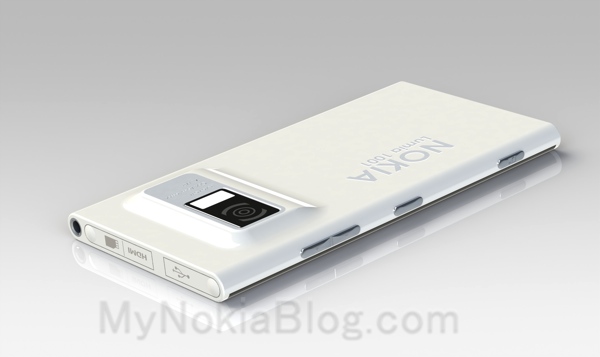
Nokia Lumia 1001 Pureview Features 41 MP Camera, Dual Core CPU, WP8

Nokia Lumia 1001 Pureview Features 41 MP Camera, Dual Core CPU, WP8The folks of Mynokiablog have published a very interesting Nokia Lumia concept, that uses a Pureview camera, an idea that has been long time speculated in the media. Meet the Nokia Lumia 1001 Pureview mockup, created by Mkrtchyan Edgar using SolidWorks. This looks like quite a polished phone, a viable one with Windows Phone 8 on board.

We’re dealing with a dual core Nokia here, one with a 1.6 GHz processor, a 4.3 inch 1280 x 768 pixel display based on AMOLED ClearBlack technology. At the back we have a 41 megapixel Pureview camera with Full HD capture and Xenon flash. Under the hood there’s a 2200 mAh battery, certainly more powerful than the one on the Nokia Lumia 808 PureView. The design borrows a few elements from the Lumia 800/N9, but it slims up the package, I guess. Nokia Lumia 1001 Pureview also has a HDMI port, DLNA, 1.3MP front camera and NFC.
It comes in 16 and 32GB versions, with a microSD card slot and a chassis that should be around 9mm thick. It weighs 160 grams and it adopts the monoblock polycarbonate casing. In the humped area of the phone with the camera it may reach a thickness of 12mm, so that’s that sacrifice you have to make for a Pureview camera. I think the Nokia Lumia 1001 looks better than the 808 Pureview. Do you?

Videos

Samsung Galaxy X Cover 2 Coming Next Month At MWC 2013

We are expecting to see a number of new devices from Samsung at next
months Mobile World Congress, and now it would appear that one of those devices is the new Samsung Galaxy X Cover 2.
The Samsung Galaxy X Cover 2 will apparently come with either Android 4.1 or 4.2 Jelly Bean and will feature a 4 inch WVGA display with a resolution of 480 x 800 pixels.
Galaxy X Cover 2
Other specifications on the Galaxy X Cover 2 include a rear facing 5 megapixel camera and a front facing 0.3 megapixel camera, the device will also feature 4GB of built in storage, plus a microSD card slot that can take up to 32GB cards.
The Samsung Galaxy X Cover 2 is designed to be resistant to dust and water, and will also feature USB 2.0, Bluetooth 4.0 and 802.11 b/g/n WiFi, plus GPS and a 1,700 mAh battery.
We should have more information on the new Samsung Galaxy X Cover 2 when it is officially announced at Mobile World Congress next month, along with some decent photos of the handset.
Galaxy X Cover 2

New Samsung Galaxy Note 8.0, Galaxy Young And Galaxy X Cover 2 Appear In Leaked Roadmap

Yesterday we heard about a number of new Samsung Galaxy devices, which included the
Galaxy Note 8.0 and the Galaxy X Cover 2, and now we have some more information on these devices, along with two other Samsung handsets, the Samsung Galaxy Young and the Galaxy Pocket Plus.
The guys over at TechnoBuffalo have obtained some information on Samsung’s 2013 roadmap, and device details in the roadmap include the Galaxy Note 8.0, Galaxy X Cover 2 and more.
Galaxy Note 8.0
As we mentioned yesterday the Samsung Galaxy Note 8.0 comes with an 8 inch display and features Android 4.2 Jelly Bean and it looks like it will come with a quad core 1.6GHz processor and will launch around March.
The Samsung Galaxy X Cover 2 will come with a 1GHz dual core processor, Android 4.1 Jelly Bean and a 4 inch WVGA display, this handset is expected to launch in February.
Galaxy X Cover 2
Next we have the Samsung Galaxy Young, which is slated for an April release and will come with a 3 inch WVGA display, a 1GHz processor and Android 4.1 Jelly Bean.
Galaxy Young
Finally there is the Samsung Galaxy Pocket Plus, which will feature a 2.8 inch HVGA display, an 850MHz processor, a 2 megapixel camera and Android 4.1 Jelly Bean, this handset is expected to arrive in February.
Galaxy Pocket Plus
We should have some more information on all of these new Samsung Galaxy devices at Mobile Wold Congress next mont

Wednesday, January 23, 2013

NEC Medias W Android Smartphone With Dual 4.3 Inch Displays Announced


NTT DoCoMo and NEC aren’t
ready to give up on the idea of folding, dual-screen smartphones just
yet. As part of the new line-up for spring 2013, the two have


teamed up to offer the Medias W, which features a 4.3-inch 540 x 960 resolution display on both the front and back of the phone. It follows in the proud tradition of devices like the Kyocera Echo and Sony Tablet P. That’s not to say the Medias W will end up as an eBay tchochke, too, but it’s going to be a tough sell.
The rest of the phone isn’t quite so out-of-this-world. It does at least double up on processing cores with its 1.5GHz powerplant, though NEC has opted for just 1GB of RAM at a time where most top-notch smartphones have moved up to two gigs. The Medias W does have a decent 16GB of internal storage, and there’s a micro SD expansion slot for bringing along even more of your favorite music, movies, and pictures.
There’s a front-facing camera and an 8MP rear-facing (at least when the Medias W is folded shut) shooter. Unlike most smartphones in this class that are built for the Japanese market, the Medias W doesn’t feature support for NFC or digital TV. The latter seems like a particularly strange omission, but perhaps NEC didn’t think consumers would be interested in watching TV on a 5-inch display that had a big black line down the middle.
But like the Tablet P and Echo, the Medias W can do just that. Its dual-display setup allows a single app to run stretched across both screens, or two apps to be run side-by-side. It still seems like little more than a novelty, and it’s hard to imagine the Medias W not fading off into obscurity.

Mozilla announces two developer phones for Firefox OS


Spanish startup GeeksPhone and Mozilla have revealed the first
smartphones powered by the Firefox OS,
with the devices intended for developers as opposed to mainstream consumers.

The two 3G handsets are the lower-end Keon (pictured on the left) and higher-end Peak. The former sports a 1GHz Qualcom Snapdragon S1 processor, 3.5-inch screen, 1,580mAh battery and a 3-megapixel camera.

The higher-end Peak, meanwhile, features a a 1.2GHz Qualcomm Snapdragon S4 processor, 4.3-inch screen, 1,800mAh battery and an 8-megapixel camera.

Both devices also houses 4 GB of ROM, 512 MB of RAM, a MicroSD slot, 802.11n wireless networking, light and proximity sensors, GPS, an accelerometer, as well as a camera flash.

Mozilla has previously urged developers to create apps for the Firefox mobile OS, which can turn websites into applications. Elsewhere, ZTE is rumored to be developing the first official Firefox smartphone.
Firefox OS-based Peak developer preview device

First “Firefox OS” Phones Previewed, to Launch in February

Mozilla, the non-profit organization behind the popular Firefox web browser, has been promoting its Firefox OS project (once known as "Boot to Gecko") for some time now. A hardware partnership with Telefonica, the international telecom giant, had been announced, but no phones had yet been unveiled.
But in an announcement today on its blog, Mozilla announced the impending launch of its first "developer preview" phones, the Keon and the Peak. Made in partnership with Geeksphone, a Spanish smartphone producer which used to make Android phones, these devices are meant to help app developers preview their work on the small screen. But they may also serve as a sneak preview of Mozilla's plan to enter the smartphone market.
Introducing Firefox OS
Designed as an alternative to Google's Android for low-powered smartphones, Firefox OS' claim to fame is that it's "built entirely using open web standards," or open-source code written in the programming languages which make up the web, like JavaScript. Likewise, Firefox OS apps are websites specially formatted to look and feel like apps, and to respond to touchscreen controls and access phone features like vibration and the GPS.
A selection of Firefox apps is already available in the Mozilla Marketplace, but developers will eventually be able to take the open-source code behind it and create their own app markets like it if they so choose. These apps also run on the preview "Aurora" version of Firefox for Android, which is available for download from Mozilla's website.
"Say 'hola'" to the Keon and Peak
The Keon is Mozilla's entry-level developer smartphone, while the Peak has somewhat more modern hardware specs.
The Keon has a 1 GHz Snapdragon processor, 512 MB of RAM, a 3.5-inch touchscreen, and 4 GB of flash memory, plus a microSD card slot to expand storage space. Its built-in camera is a basic 3-megapixel shooter, and lacks an LED flash. It's roughly comparable to 2010's iPhone 4 in terms of raw hardware specs, although it probably won't be able to play the same kinds of 3D games since they'll be written as web applications.
The Peak has a dual-core 1.2 GHz processor, a 4.3-inch IPS display, and an 8-megapixel camera with a flash, plus a 2-megapixel front-facing camera. It has the same amount of RAM and flash storage as the Keon does, though.
Both the Keon and the Peak are unlocked GSM smartphones, which may mean they will work on AT&T and T-Mobile's networks in the States.
Pricing and availability
According to Peters, the "First phones will be available in February." Prices have yet to be announced.
Jared Spurbeck is an open-source software enthusiast, who uses an Android phone and an Ubuntu laptop PC. He has been writing about technology and electronics since 2008.